Resource guide — Updated 10 August 2026
Commercial Repainting Without Disruption
Practical ways commercial repainting projects keep your business trading normally.
Occupied-Site Repainting
Commercial Repainting: Disruption
Well-planned Commercial Repainting Without Disruption uses scheduling, zoning and clear communication to reduce disruption for staff, tenants and customers.
Planning Around Trading Hours
The most direct way to reduce disruption is to schedule work outside the hours the business actually needs the space, whether that's after-hours, overnight, or across a weekend closure, depending on the nature of the business and the areas being painted. For businesses that can't close at all, such as some retail, hospitality or healthcare premises, work can often still be planned around known quiet periods rather than peak trading times.
This kind of scheduling needs to be agreed and locked in early, since it affects staffing, material delivery timing, and how many painters are on site at once trying to get a section finished within a limited access window. A contractor experienced with occupied commercial sites should be able to talk through realistic options for your specific trading pattern rather than offering a single standard approach.
Choosing Paint Systems Suited to Occupied Premises
Low-odour and fast-curing paint systems are worth discussing specifically for occupied commercial premises, since strong solvent smells or long dry times can affect staff, customers or tenants well beyond the actual painting hours. Faster-curing systems also mean a freshly painted area can often go back into use sooner, which matters when space is tight or areas can't stay closed off for long.
The right choice depends on the surface and the finish required as much as the occupied-site factor, so this is a conversation worth having directly with whoever is scoping the job, rather than assuming every paint system behaves the same way around people working or shopping nearby.
Staging and Zoning the Work
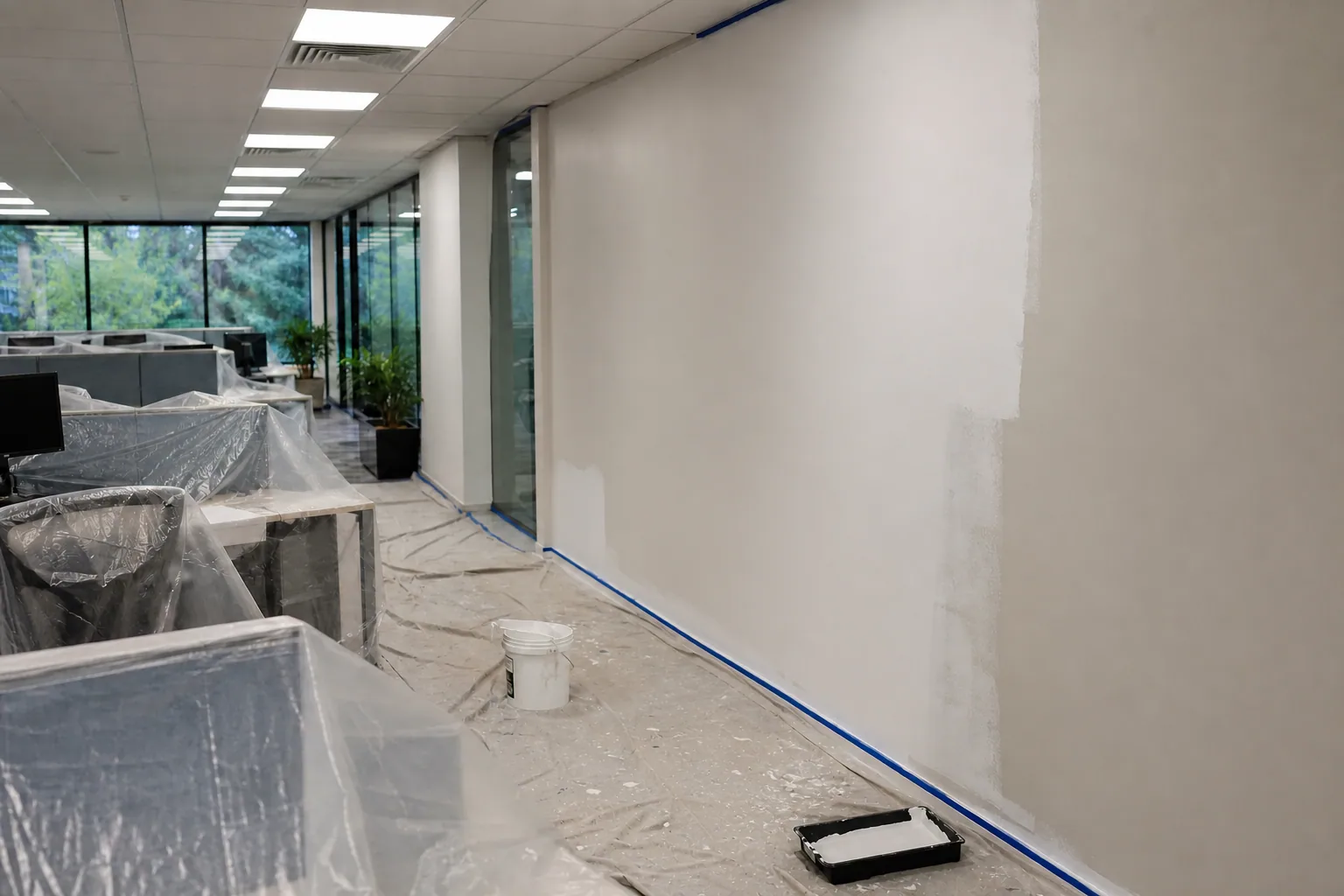
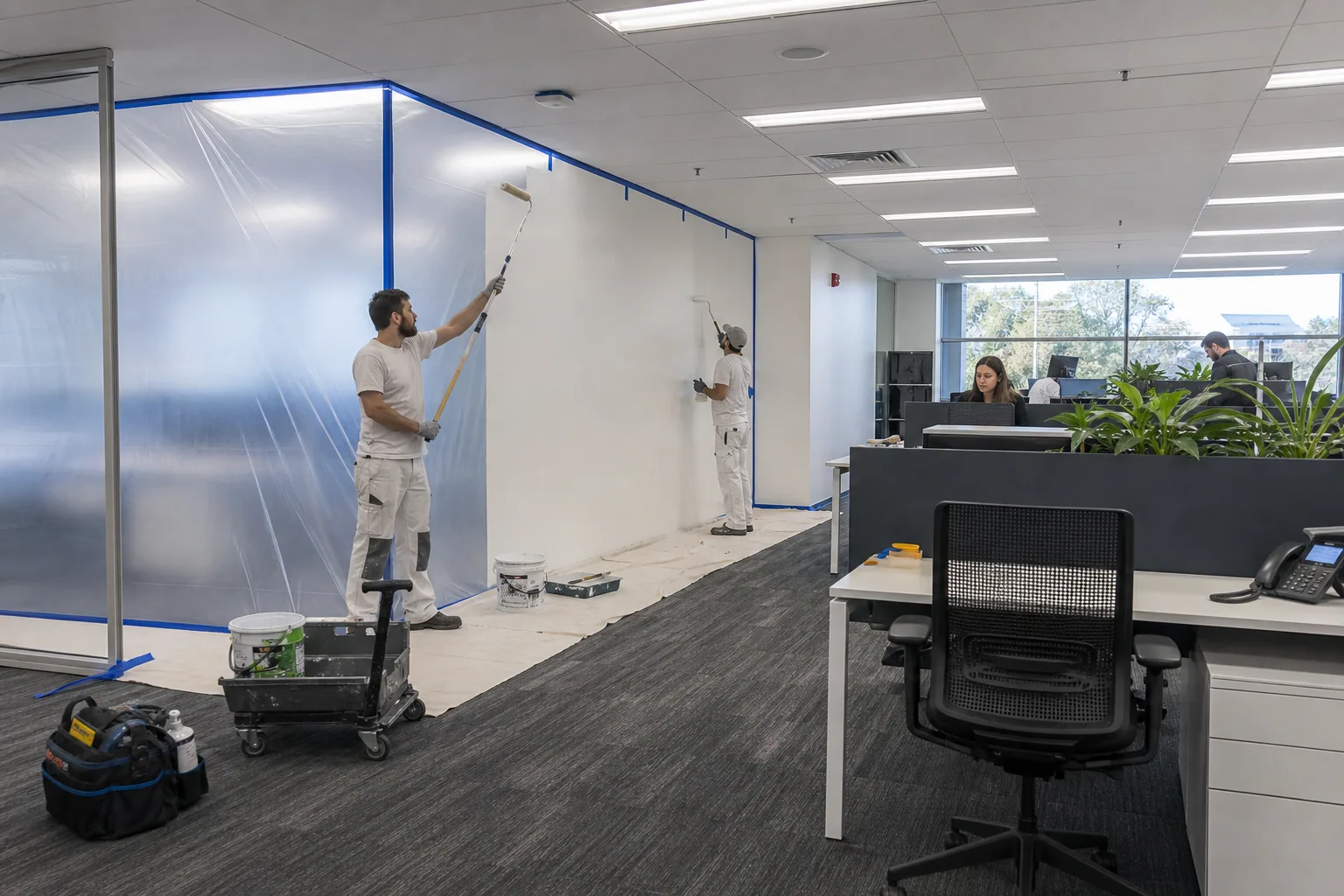
Breaking a commercial repaint into zones, one floor, one wing, one section of a retail fitout at a time, rather than opening up the whole site at once, lets the rest of the business keep operating close to normally while a contained area is out of action. This is particularly relevant for multi-tenant buildings, larger offices, or retail and hospitality spaces that can't afford to close entirely.
A clear staging plan, agreed before work starts, also gives the business a concrete answer when staff or customers ask how long disruption in a given area will last, rather than a vague estimate that tends to generate more frustration than the actual work itself.
Managing Safety, Signage and Access
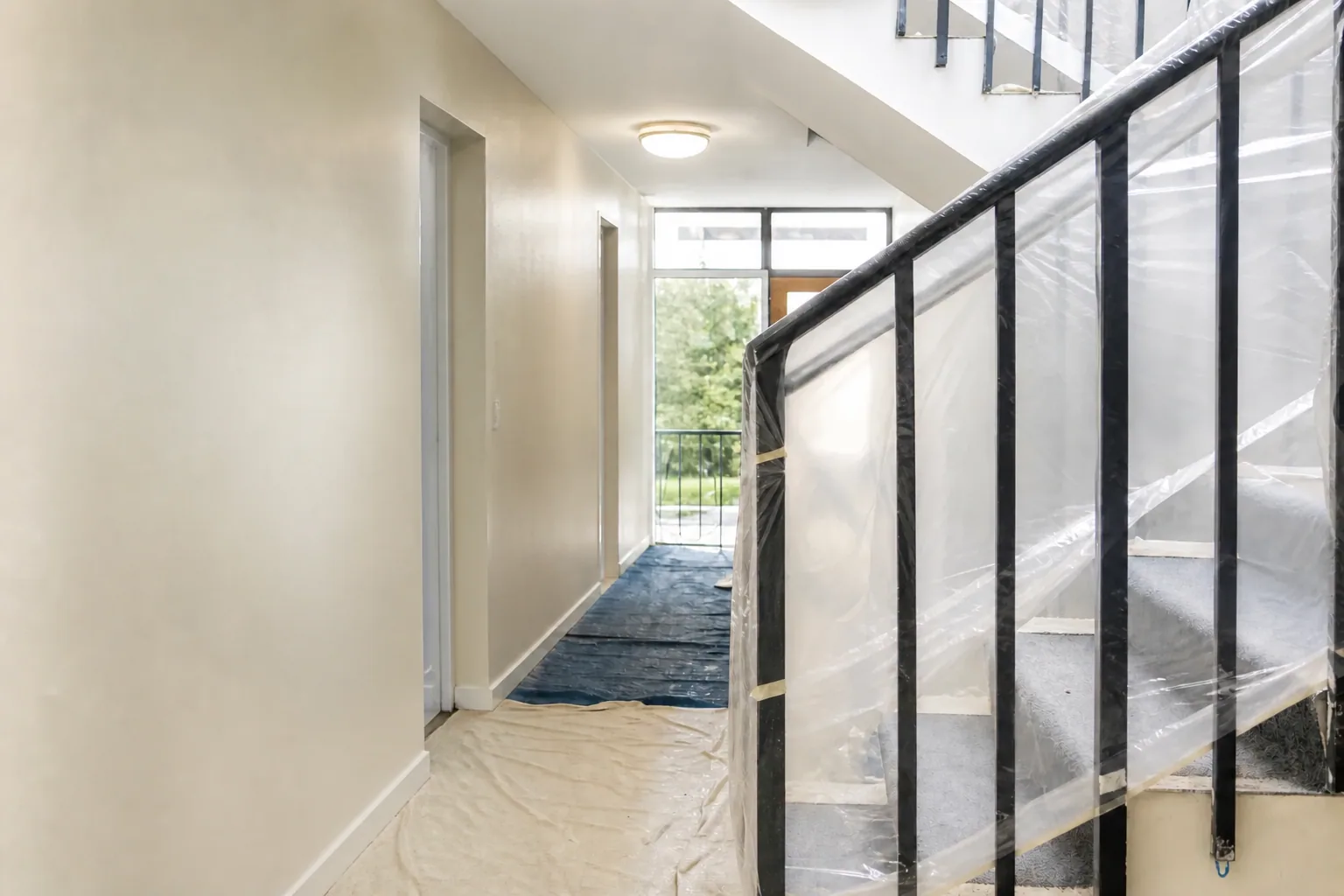
Occupied commercial sites need clear signage, barricades and defined pedestrian routes around active work areas, both to keep staff, customers and the public safe, and to reduce the number of people wandering through a wet-paint area or a section with equipment and materials in use. Proper site safety planning, including how deliveries, waste and equipment move through the site without blocking normal business access, is a core part of minimising disruption, not just a compliance formality.
This is also where experience with occupied sites really shows: a contractor used to working around live businesses tends to have practical systems already in place for this, rather than treating it as a new problem on every job.
Communicating With Staff, Tenants and Customers
Clear, specific communication in advance, what's happening, when, in which areas, and what if any access will be restricted, tends to reduce complaints and confusion far more than people simply noticing scaffolding or drop sheets appear one day. For multi-tenant buildings this usually means coordinating with building management and each affected tenant, while a single-business site can often manage this with a simple internal notice and, where relevant, a customer-facing notice at entry points.
Setting a single point of contact for questions during the project, rather than leaving staff to field ad hoc queries about the work, also keeps communication consistent and reduces the chance of mixed messages about timing or access.
Choosing a Contractor Experienced With Occupied Sites
Painting an occupied commercial site is a genuinely different job to painting an empty building, and it's worth choosing a contractor who can speak specifically to how they manage scheduling reliability, insurance, and site inductions for a live business environment. Reliability on timing matters more in this setting than almost anywhere else, since a delayed start or an overrun into trading hours has a direct flow-on effect on the business itself, not just the painting schedule.
Asking a prospective contractor how they've handled staging, safety and communication on previous occupied commercial sites is a useful way to gauge whether they've genuinely got a system for this, rather than simply agreeing to work around the business without a concrete plan behind it.
Sources & further reading
Authoritative references for the safety, planning and product considerations discussed in this guide.
Frequently asked questions
Quick answers to follow-up questions on this topic.
In many cases yes, particularly with staged, zoned work, after-hours scheduling, or a combination of both, though the practical answer depends on the type of business, the areas being painted, and how much space can realistically be closed off at any one time.
They're not compulsory, but they're worth discussing for spaces where staff, customers or tenants will be nearby during or shortly after painting, since strong odours and long dry times can affect an occupied space more than an empty one.
Giving specific advance notice, covering what areas are affected, when, and any access changes, well before work starts generally leads to a smoother project than a last-minute or vague announcement.
Ask specifically how they plan to stage the work, manage access and safety signage, handle any odour or noise concerns, and what happens if a section overruns its scheduled window, since the answers reveal how much genuine experience they have with occupied commercial sites.