Roof Painting
Roof painting that refreshes faded tiles or metal roofing with a protective new coating.
Explore service →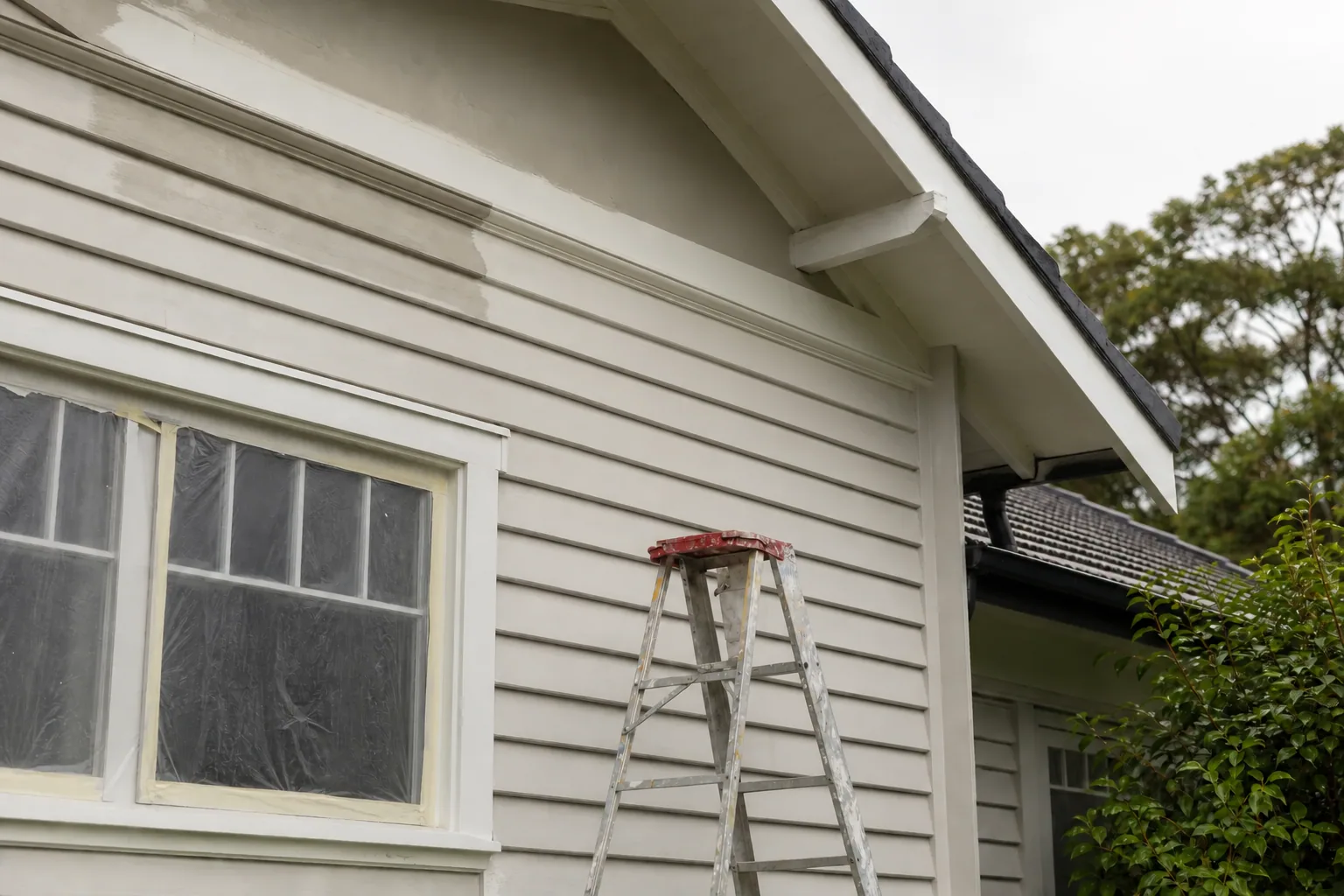
Service
Exterior painting that protects North Shore homes from sun, rain and salt air, on any surface.
Exterior House Painting Specialists
For Exterior House Painting North Shore, careful preparation, a suitable coating system and a clearly defined quotation shape the project.
Auckland's weather is hard on exterior paintwork. Strong sun fades and chalks paint, driving rain finds its way into any gap in the surface, and homes on more exposed North Shore blocks cop a fair amount of both. Once paint starts to peel, blister or lose its colour, it's not just a look problem, it's the point where the surface underneath starts to be exposed as well.
We repaint the exteriors of homes across the North Shore, working on weatherboard, rendered masonry, brick veneer and the timber trim, eaves and fascia that tie a facade together. The goal is a finish that looks sharp from the street and holds up to another few years of Auckland weather, not just a coat of paint that looks fine until the first heavy storm.
Who this is for: This service is for homeowners whose exterior paint is fading, cracking or peeling, anyone updating a facade's colour scheme, and sellers wanting to improve kerb appeal before listing. It also suits renovators bringing an older home's exterior in line with recent work done inside.
A quick look at what's covered when you book this service.
The whole exterior is washed down before any preparation work starts, removing dirt, grime and loose material from every surface. This gives a clean base for scraping and priming, rather than working over surfaces that are still dirty.
Failed or flaking paint is scraped, sanded and feathered back to a sound edge so repairs don't create a visible ridge once repainted. Getting this stage right prevents the new coat from lifting again in the same spots.
Bare timber and other problem areas are primed appropriately before topcoating, since skipping this step is a common cause of early peeling. We match the primer to the substrate rather than using a single generic product everywhere.
Windows, paths and garden beds near the work area are masked and protected before painting begins, keeping overspray and drips away from surfaces that aren't being coated. This careful setup protects the parts of your property outside the job's scope.
Two coats of topcoat are applied across walls, eaves and fascia for consistent, durable coverage that holds up to Auckland's weather. A single coat rarely gives the even, long-lasting finish that a proper exterior repaint should deliver.
Minor repairs to fascia and trim are carried out where required, addressing small areas of damage before they're painted over. This keeps the exterior genuinely sound rather than simply covering existing problems with a fresh coat.
Mould or mildew-affected surfaces receive spot treatment before painting, addressing the underlying growth rather than just coating over it. This matters most on shaded or damp-prone sections of the facade where growth tends to return quickly.
We walk the finished exterior with you to check coverage and finish, then clear masking, sheeting and any debris from the site. The property is left tidy and ready to enjoy once the job is complete.
Here's what to expect from your first enquiry through to the final coat.
We inspect the exterior in person, checking access, height, substrate condition and any areas of timber decay or moisture damage.
You'll receive a written quotation, and we'll work with you to schedule the job around a suitable run of dry weather.
Surfaces are washed, scraped, sanded and primed before two coats of topcoat are applied to walls, trim, eaves and fascia.
We walk the property with you to check coverage and finish, then clear away masking, sheeting and any debris from the site.
A few of the things we weigh up when choosing the right product for this job.
UV-resistant exterior acrylics help reduce fading on sun-facing walls, holding their colour and finish for longer than standard products under constant exposure. This matters most on north- and west-facing elevations that take the strongest, most direct sun through the day.
Render and masonry need coatings that let trapped moisture escape rather than sealing it in, which can otherwise cause blistering or bubbling. Breathable systems are worth prioritising wherever moisture movement through the wall is a known issue on the property.
Timber weatherboard expands and contracts with the seasons, and a flexible finish moves with it rather than cracking along board joints. Rigid coatings applied to timber that moves are a common cause of early paint failure at these seams.
Shaded or damp-prone sections of a facade are prone to mould and mildew growth, and additives formulated to resist this help the finish stay cleaner for longer. These sections often need different product choices to the rest of a sun-exposed facade.
Bare or previously bare timber needs an appropriate primer to seal the surface and give the topcoat something stable to bond to. Skipping or mismatching this step on repaired or replaced sections is a common cause of early peeling in exactly those spots.
A tinted primer helps achieve even coverage where a dramatic colour change is planned, particularly moving from a dark existing colour to a lighter new one. This extra step can save an additional topcoat later and gives a more consistent final result.
What to expect in terms of timing and access while the work is underway.
Exterior painting is weather-dependent, so the schedule can shift if rain or extreme heat is forecast during preparation or drying. Expect some noise during pressure washing and sanding, ladders or scaffolding set up against the house, and garden beds or paths near the walls covered for protection. Access to driveways and side paths may be limited for short periods while work is underway, and we'll let you know in advance if scaffolding needs to stay up overnight.
A few reasons homeowners and property managers choose not to DIY this job.
Two-storey homes and steep blocks call for proper ladders, scaffolding or platforms and safe work practices at height. We're equipped to reach every elevation of a property safely, rather than taking shortcuts on the sections that are hardest to get to.
Peeling or cracked exterior paint is sometimes a coating issue and sometimes a sign of underlying timber decay or trapped moisture. Correctly telling the difference before painting over it prevents a fresh coat from failing again within a season or two.
Weatherboard, render, brick and previously bare timber all need different primers to bond properly and resist early peeling. Choosing the right one for each substrate, rather than a single all-purpose product, is a big part of getting exterior paint to last.
Keeping colour and sheen even across an entire facade takes careful product mixing and application, especially on large wall areas painted over several days. Patchy or mismatched sections are one of the most obvious signs of a rushed exterior job.
Working at height on a facade brings insurance, scaffolding and safety considerations that go well beyond a weekend DIY job. We factor these into how the work is planned and carried out, so access risks are managed properly rather than overlooked.
Exterior paint needs the right conditions to cure properly, and rushing a coat on before rain or extreme heat can undo days of preparation. We plan around the weather rather than a fixed calendar, so the finish has the best chance of holding up.
Straight answers to the questions we're asked most often about exterior painting.
It varies with aspect, exposure and the condition of the surface underneath, but sun-facing and exposed walls generally need attention sooner than sheltered ones. We can give you a more specific view once we've seen the property.
We build some flexibility into the schedule for exterior work and will pause preparation or painting if weather isn't suitable, then pick back up once conditions allow.
Yes, if you can provide the colour details or a sample area, we can match it closely so new and existing paintwork sit together well.
Minor timber repairs to fascia and trim can usually be included. More significant timber replacement may need to be arranged separately, and we'll flag this during the site assessment.
Occasionally, depending on boundary setbacks and the height of the work. If that's likely, we'll discuss it with you early so you can arrange access with your neighbour before we start.
Other services North Shore properties often combine with this one.
Roof painting that refreshes faded tiles or metal roofing with a protective new coating.
Explore service →Specialist preparation and repainting for timber weatherboard homes, built to handle moisture and movement.
Explore service →Painting and preparation for brick, render and masonry surfaces, addressing cracking and efflorescence before coating.
Explore service →Thorough stripping and preparation of failed, multi-layered paintwork on older North Shore homes.
Explore service →A sample of the suburbs where we take on this kind of work.
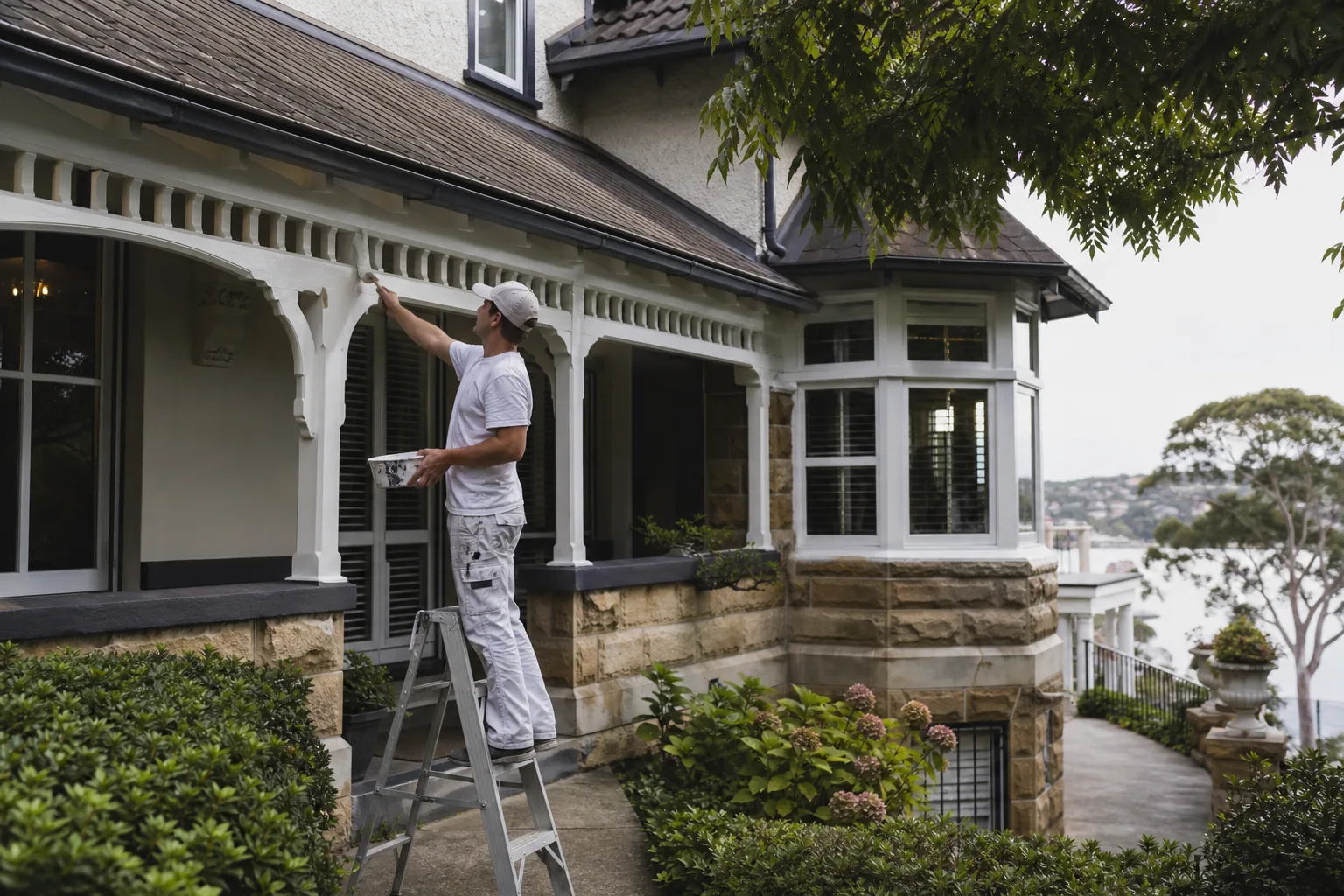
Devonport is one of Auckland's best-preserved heritage suburbs, with streets of Victorian and Edwardian villas…
Painters in Devonport →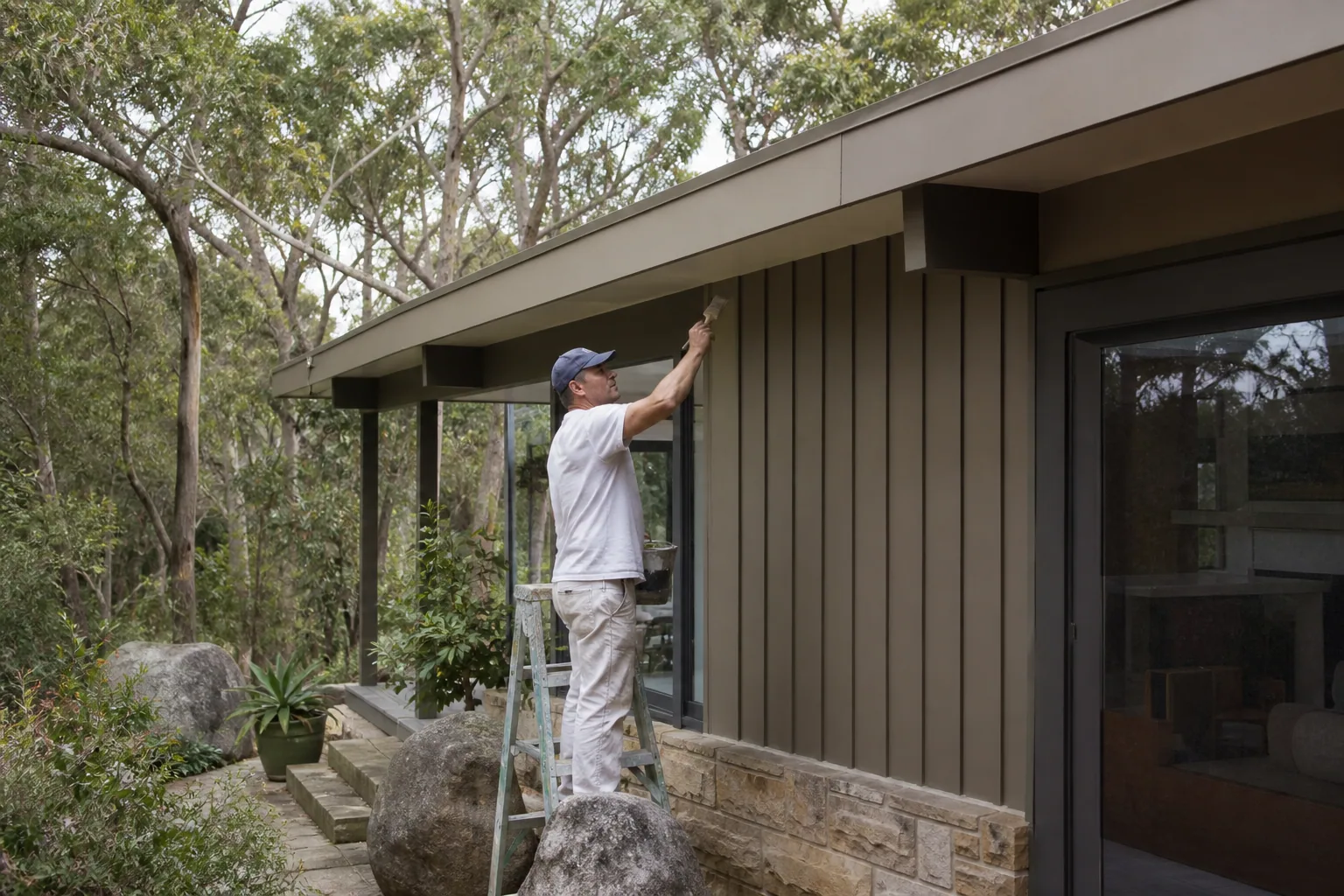
Campbells Bay is one of the smaller East Coast Bays suburbs, with a mix of older beach houses — some dating ba…
Painters in Campbells Bay →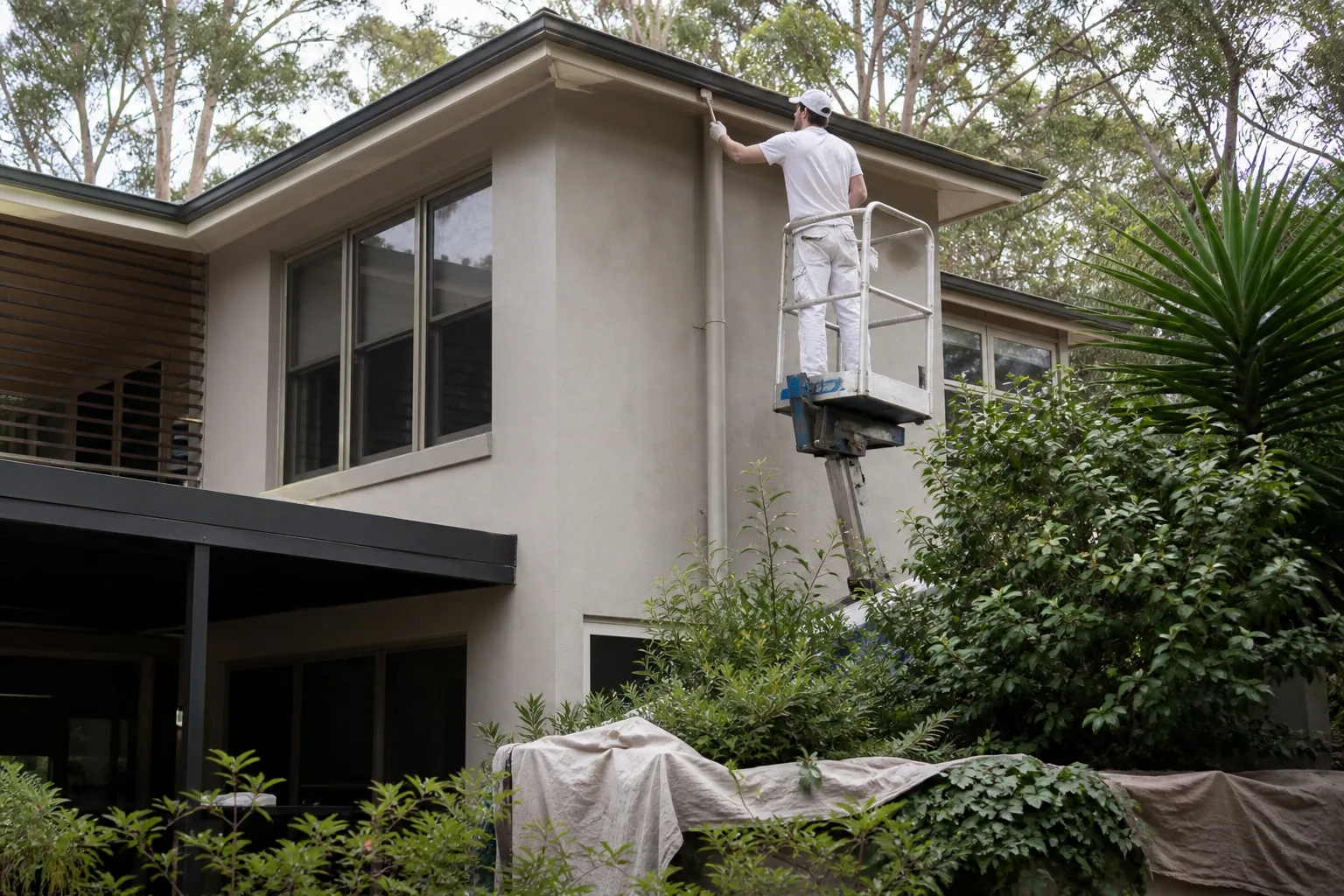
Browns Bay is one of the East Coast Bays' main town centres, with a busy beachfront shopping and dining strip …
Painters in Browns Bay →Whether it's a single room or a full property, we bring the same careful preparation to every exterior painting job.
Get in touch today for a free, no-obligation quote — we're happy to talk through the scope before you commit to anything.