Resource guide — Updated 10 August 2026
Cabinet Painting vs Kitchen Replacement
Cabinet painting versus a full kitchen replacement, compared on disruption and outcome.
Kitchen Refresh Options
Kitchen Replacement vs Cabinet Painting
Our Cabinet Painting vs Kitchen Replacement comparison clarifies when refinishing is practical and when the cabinetry itself needs more than paint.
What Cabinet Painting Actually Involves
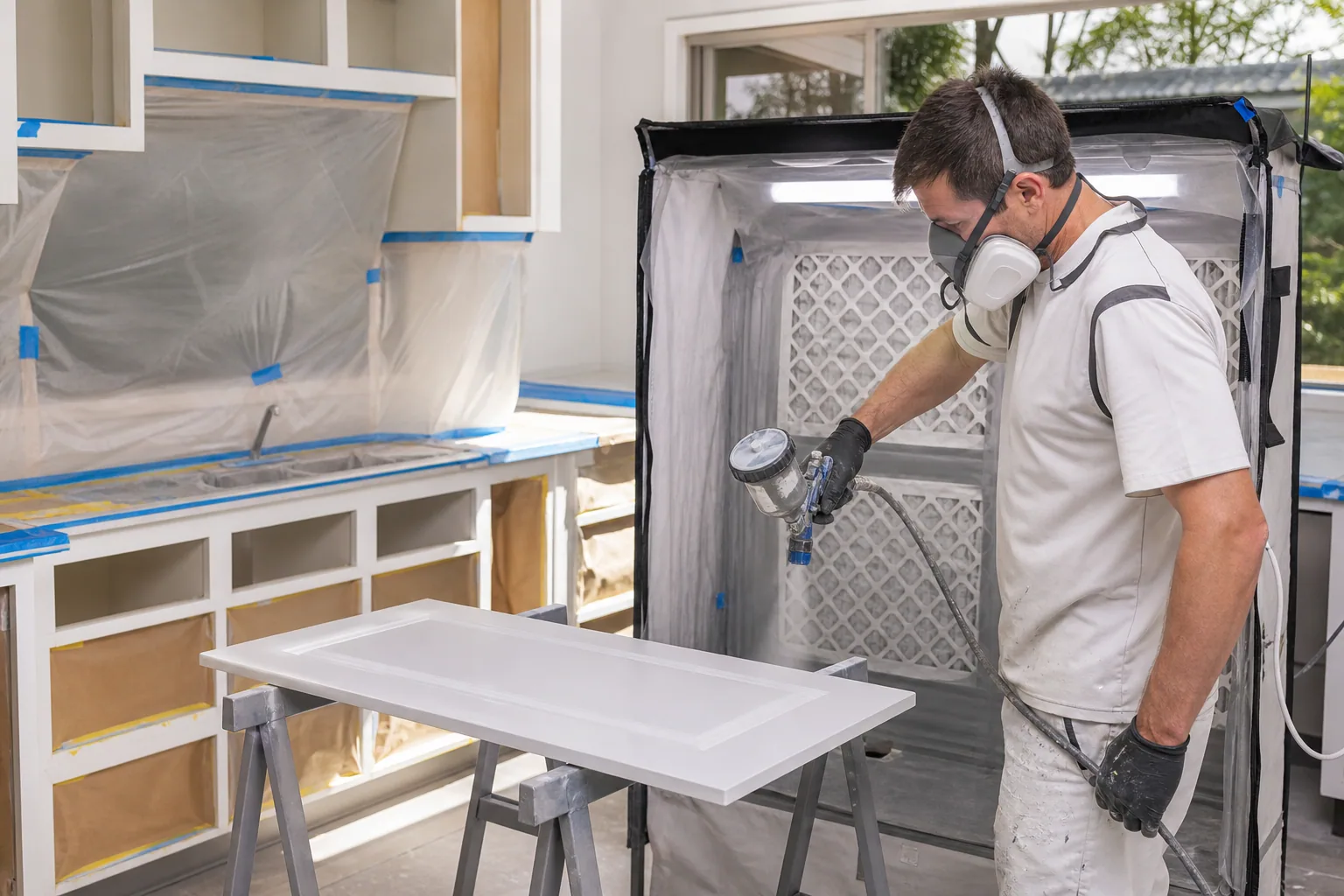
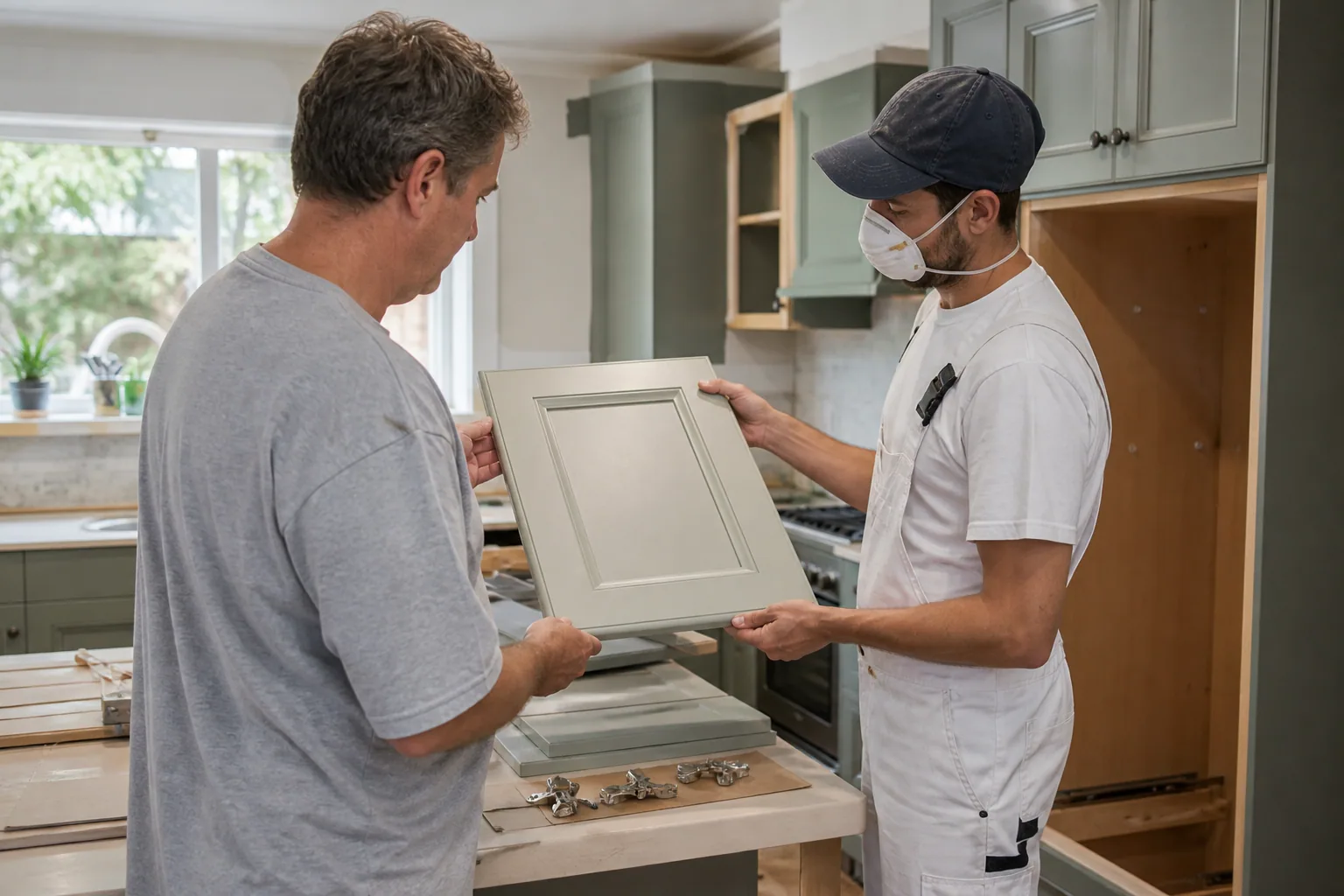
Cabinet painting, sometimes called cabinet refinishing, works with the existing layout and carcasses (the boxes the doors and drawers are fitted to) and focuses on transforming the doors, drawer fronts and any exposed cabinet faces. The process typically involves removing doors and hardware, thorough cleaning and sanding or de-glossing to help paint adhere to factory finishes, filling any dents or chips, priming with a product suited to the existing material, and applying a durable topcoat designed to handle kitchen conditions.
Because the layout, benchtop, splashback and appliances usually stay in place, the kitchen remains recognisably the same space, just with a refreshed look. Hardware such as handles and hinges is often replaced at the same time as a simple way to update the overall feel without touching the cabinetry itself.
What a Full Kitchen Replacement Involves
A full replacement goes much further: removing the existing cabinetry, benchtop, splashback and often the flooring beneath the old kitchen, then reconfiguring or rebuilding the layout, installing new cabinet boxes, doors, benchtops and splashback, and reconnecting plumbing and electrical services to match the new design. This is a construction project in its own right, usually involving multiple trades in sequence rather than a single scope of work.
Replacement makes sense to consider when the layout itself no longer works, when cabinet carcasses are water-damaged, structurally compromised or simply falling apart, or when the household wants a genuinely different kitchen rather than a refreshed version of the current one.
Timeframe and Disruption Compared
Cabinet painting is generally a matter of days from start to finish, and because much of the detailed work, such as door painting, can often be done off-site or in a contained area, the kitchen can sometimes stay partially usable during parts of the process. A full replacement is a longer undertaking measured in weeks rather than days, and typically means living without a functioning kitchen for a meaningful stretch of that time, since the benchtop, sink and cooking appliances are all disconnected during the rebuild.
For households that can't easily go without a kitchen, care for someone at home, run a home-based routine around meal times, or simply want to minimise upheaval, this difference in disruption is often the deciding factor rather than anything to do with the finished look.
What You Keep vs What Changes
With cabinet painting, you keep the existing layout, cabinet carcasses, and typically the benchtop, splashback and flooring, while what changes is the colour and finish of the doors and drawer fronts, generally along with the hardware. This suits kitchens where the bones are solid and the main issue is a dated or tired-looking finish rather than a layout or functionality problem.
With replacement, essentially everything changes: layout, storage configuration, benchtop material, splashback, and often the flooring, appliances and lighting layout as well. This is the right path when the kitchen doesn't work for the household as it stands, regardless of how it's finished, and painting alone wouldn't solve the underlying issue.
When Painting Makes Sense vs When Replacement Is the Better Call
Cabinet painting is a strong option when the cabinet carcasses are structurally sound, the layout suits the household's needs, and the main complaint is the colour, style or wear of the doors and finish. It's also a sensible middle step for a kitchen that's due for a refresh but where a full renovation isn't planned in the near term.
Replacement becomes the better call when there's water damage or swelling in the cabinet boxes themselves, not just the doors, when the layout genuinely doesn't work for how the household uses the space, when benchtop or splashback materials are failing, or when the household is planning other structural changes to the kitchen anyway, such as moving the sink or adding an island. In these cases, painting the existing doors would only address the surface, not the underlying problem.
Combining Painting With Selective Upgrades
It's common, and often a sensible middle ground, to combine cabinet painting with a handful of targeted upgrades: new hardware, a new benchtop or splashback while the doors are off, or updated lighting, without going as far as a full rebuild. This lets a household address the elements that genuinely bother them most while avoiding the scale and disruption of a complete kitchen replacement.
Getting clarity on which specific elements of the current kitchen are the actual problem, tired doors, an outdated benchtop, a layout that no longer suits the household, is the most useful starting point for deciding how far to go, rather than defaulting to either the smallest or the largest option available.
Sources & further reading
Authoritative references for the safety, planning and product considerations discussed in this guide.
Frequently asked questions
Quick answers to follow-up questions on this topic.
A properly prepared and painted cabinet door, with the right primer and a durable topcoat, can look genuinely refreshed and even, but the underlying door profile, layout and hardware positions stay the same, so it's a transformation of finish rather than a change of style or configuration.
It depends on preparation quality, the paint system used and how the kitchen is used day to day, but a properly prepared and painted kitchen generally holds up well under normal household use for a good number of years before touch-ups are needed.
Many laminate and vinyl-wrapped surfaces can be painted successfully with the right preparation, typically thorough cleaning, de-glossing or sanding, and a primer designed to bond to that specific material, though very worn or delaminating surfaces may not be a good candidate and could point toward replacement instead.
If the layout works, the carcasses are structurally sound, and the main issue is the look of the doors and finish, painting is usually the more proportionate option, since replacement would rebuild a layout that doesn't need changing.